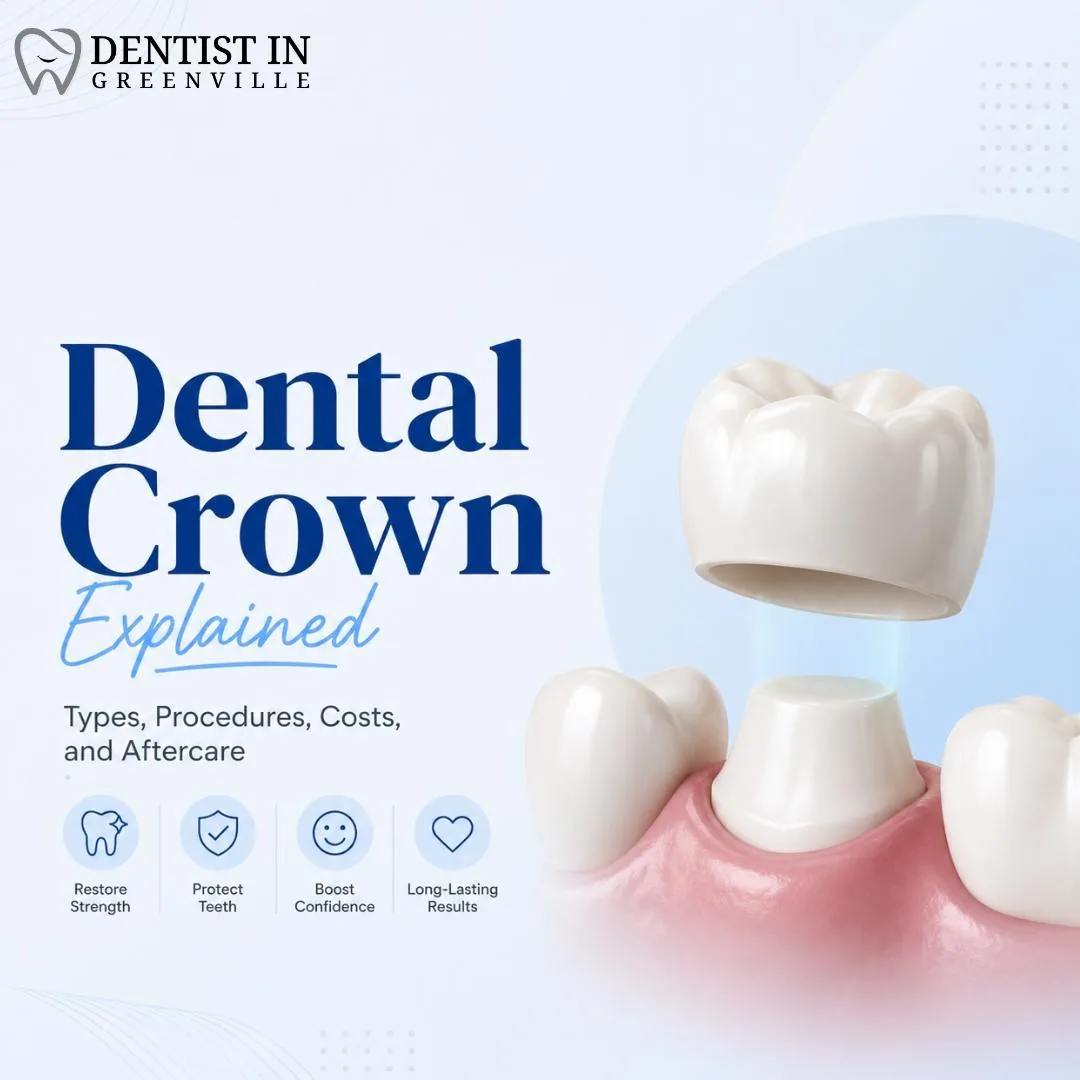
Many people face a broken or painful tooth and do not know their options. A Dental Crown can fix a cracked, worn, or decayed tooth and save it from extraction.
A crown can last between 5 to 15 years with proper care. Here you will know dental crown types, procedures, costs, and aftercare tips. It will cover tooth cap materials, crown procedure steps, temporary crown care, and expected crown lifespan.
Dental crowns come in various types, each serving unique purposes. Metal crowns offer durability and strength, making them suitable for back teeth. Porcelain crowns provide a natural look and blend well with the surrounding teeth. Resin crowns are less expensive but may wear down faster compared to other materials.
Patients often choose dental implants for long-term tooth replacement solutions. Crowns play an essential role in tooth restoration following decay or damage. They provide support for broken, cracked, or decayed teeth while enhancing overall oral health.
Transitioning from the types of dental crowns to the procedure helps clarify what patients can anticipate. The dental crown procedure typically requires two appointments to finish. During the first visit, a dentist will conduct an examination and take X-rays to assess oral health. They will prepare the tooth that needs restoration by removing decay and shaping it for a crown.
They make impressions of the tooth, which help create a cap that fits perfectly. A temporary crown is placed over the prepared tooth until the permanent one is ready. Some advanced practices offer same-day solutions using in-office milling technology, allowing completion in just one appointment. Patients usually experience minimal recovery time after this process as dental crowns provide essential support for cracked or decayed teeth. Dentists also place crowns after root canal treatment or large fillings.
The cost of dental crowns varies widely. A single crown typically costs between $800 and $2,500. Without insurance, patients often pay between $600 and $2,500 for a crown. Most individuals spend around $1,200 to $1,800 per tooth. Insurance can help lower these expenses but check coverage details before scheduling appointments.
After the procedure, proper aftercare is essential for oral health. Patients should maintain good dental hygiene practices to extend the life of their crowns. Regular dental visits play a key role in monitoring any changes or problems with crowns over time. With proper care, many crowns last between 5 to 15 years before they may need replacement.
Dental crown types include all-ceramic, porcelain fused to metal, gold, and zirconia. Dentists also use a temporary crown while you wait. These types help tooth restoration and dental restoration. Some crowns serve cosmetic dentistry needs.
You may need a crown for tooth decay or after a tooth repair. Crowns protect weak teeth and restore bite and form. Dentists place crowns after root canals or large fillings. They also fix broken teeth.
The crown procedure starts with an exam and X-rays. The dentist shapes the tooth and makes an impression. They place a temporary crown until the permanent crown fits. On a later dental visit they cement the tooth cap in place.
Dental cost varies by material and type. Gold and zirconia cost more. Porcelain and all-ceramic cost mid range. A temporary crown adds to the dental cost. Ask your dentist for a full estimate and insurance details.
Follow aftercare tips like gentle brushing and daily flossing. Avoid sticky or very hard foods at first. See your dentist for regular dental visits. Good oral health helps crowns last longer.
Yes, a dental implant can support a crown. The dental implant replaces a missing root. The crown, or tooth cap, sits on the implant to finish the tooth restoration. This option helps prevent further tooth decay and keeps your smile.
Tell us a little about what you need — we'll be in touch shortly.
4 Market Point Dr Suite E, Greenville, SC 29607, United States

Hi! I'm Tooth fairy! Your AI Assistant Ask me anything