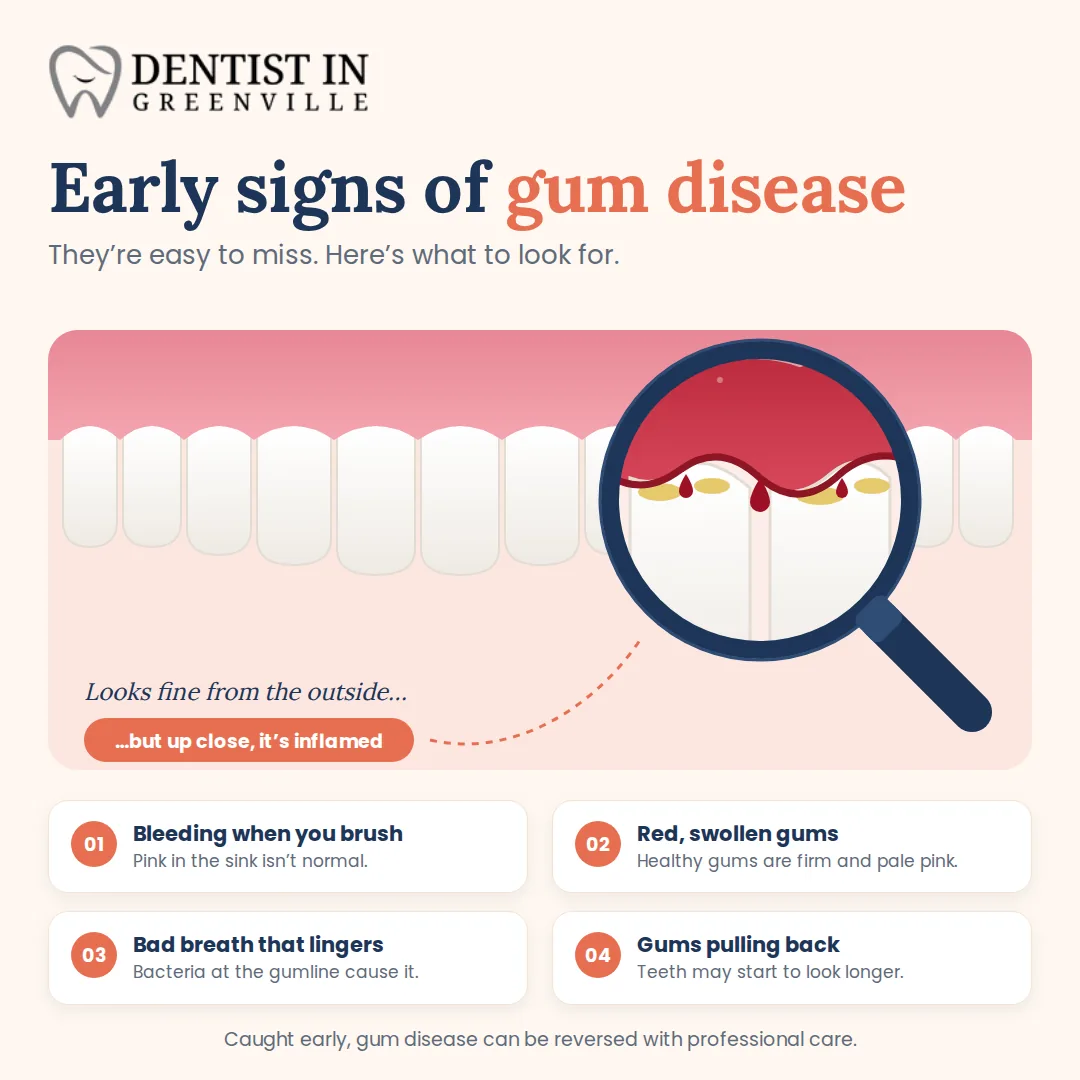
Many people worry about bleeding gums or bad breath and hope the problem will go away. They may see red, swollen gums when they brush or notice a bad taste after meals. These signs can mean early gum disease or gingivitis.
Early signs of gum disease you shouldn't ignore include bleeding gums and swollen gums. Here you will know about gum bleeding, plaque buildup, receding gums, and persistent bad breath.
Gum disease can show up in various ways. People should pay attention to symptoms like bleeding gums and persistent bad breath.
Bleeding gums during brushing or flossing often signal the earliest stage of gum disease. This common symptom indicates inflammation in the gums, making them red and tender. Healthy gums appear firm and pink, but swollen or bleeding gums show signs of potential issues like gingivitis. Ignoring this warning sign can lead to more serious issues, including periodontal disease.
Daily dental hygiene practices help prevent plaque buildup that causes these problems. If someone notices blood on their toothbrush or dental floss, they should not dismiss it as normal.
It is essential to seek care from a dentist if symptoms persist, as early treatment can protect oral health and prevent further complications such as tooth decay and receding gums.
Red, swollen, or tender gums are clear signs of inflammation related to gum disease. Healthy gums should be firm and pink in appearance. When they change color or become puffy, it signals a problem.
Many people notice these changes first during brushing or flossing. The earliest sign of gum disease often appears as bleeding when caring for teeth.
Ignoring swollen gums can lead to worse issues like gingivitis and periodontitis. Persistent bad breath may also accompany these symptoms, making dental care vital at this point. Dental hygiene practices become crucial for preventing further damage to the gums and teeth. Understanding these early signs helps individuals take action before conditions worsen.
Persistent bad breath may signal gum disease. This condition often starts with subtle signs before leading to more severe problems. Healthy gums should look firm and pink, but swollen or tender gums can indicate inflammation. A bad taste in the mouth often accompanies this issue.
Individuals may notice that their breath remains unpleasant even after brushing or flossing regularly. In some cases, they might find tooth sensitivity increases alongside changes in oral health.
Persistent bad breath could be a red flag for periodontal disease, making it essential to monitor these symptoms closely. Seeking dental care is crucial if individuals experience such issues consistently; dentists excel at identifying and treating underlying causes of poor oral hygiene and plaque buildup.
Gum recession happens when gum tissue pulls back from the teeth. This often exposes more of the tooth or even its root. Receding gums indicate periodontal disease, which can lead to serious oral health issues if left untreated.
People may also experience tooth sensitivity as a result of this condition. They might feel discomfort when eating hot or cold foods.
Healthy gums should remain firm and pink, not inflamed or red. Gum disease usually starts with subtle signs like bleeding while brushing, rather than pain; many do not realize they have a problem until it progresses further.
Tooth sensitivity can arise as gum disease worsens, making everyday activities uncomfortable for those affected by it.
Gum recession leads to changes in tooth alignment or bite. As the gum tissue pulls back from teeth, it can create gaps that affect how a person’s teeth fit together. This misalignment often results in discomfort while chewing or biting down.
Tooth movement may occur as gums recede and inflammation develops. A shift in bite can also happen if deep pockets form between teeth and gums due to advanced gum disease. Good oral hygiene becomes crucial at this stage, since ignoring these signs increases the risk of tooth decay and periodontitis.
Ignoring early signs of gum disease can lead to serious health issues. Quick action helps prevent further damage and supports better dental health moving forward.
Ignoring early symptoms of gum disease can lead to serious oral health problems. Signs like bleeding gums during brushing or flossing often indicate gingivitis, which is the first stage of gum disease.
If left untreated, this condition can advance to periodontitis. This more severe form can cause receding gums and tooth loss.
Persistent bad breath and red, swollen gums signal inflammation that shouldn't be overlooked. These symptoms suggest plaque buildup that requires attention. Failing to address these issues increases the risk of dental hygiene complications like tooth decay and deep pockets between teeth and gums.
Regular check-ups with a dentist help prevent further damage by identifying these signs early on.
Early signs of gum disease often demand prompt attention. Individuals should seek dental care if they experience bleeding gums while brushing or flossing. This symptom indicates inflammation and can signal the onset of gingivitis.
Red or swollen gums are also clear warning signs; healthy gums appear firm and pink, not tender or puffy.
Persistent bad breath may suggest underlying issues as well. Receding gums point to possible periodontal disease and warrant a trip to the dentist. If tooth sensitivity becomes noticeable, it could indicate gum issues progressing beyond initial symptoms. Taking action early protects oral health and helps prevent tooth decay in the long run.
Taking care of gums is vital for good oral health. People can protect their gum health by adopting effective dental hygiene habits. Brushing teeth twice a day and flossing daily helps remove plaque that causes gingivitis. Healthy gums appear firm and pink, while red or puffy gums often signal trouble.
Regular check-ups with a dentist ensure timely detection of any issues. Ignoring symptoms like bleeding gums during brushing can lead to more severe conditions, including periodontitis.
Addressing problems early prevents complications such as receding gums or tooth decay down the road. Maintaining fresh breath also contributes to overall confidence and well-being.
Red or swollen gums are common early signs. Gums that bleed when you brush or floss also signal problems. You may notice bad breath or gums that pull away, called receding gums.
Gingivitis is early gum disease from plaque buildup. If you leave it, bacteria can cause more damage. It can turn into periodontitis and harm oral health.
Poor dental hygiene lets plaque stay on teeth and gums. Plaque feeds bacteria that cause inflammation and tooth decay. Clean teeth lower your risk.
See a dentist if you have bleeding, bad breath that does not go away, or receding gums. Early care stops gingivitis and helps protect oral health from periodontitis and tooth decay.
Tell us a little about what you need — we'll be in touch shortly.
4 Market Point Dr Suite E, Greenville, SC 29607, United States

Hi! I'm Tooth fairy! Your AI Assistant Ask me anything