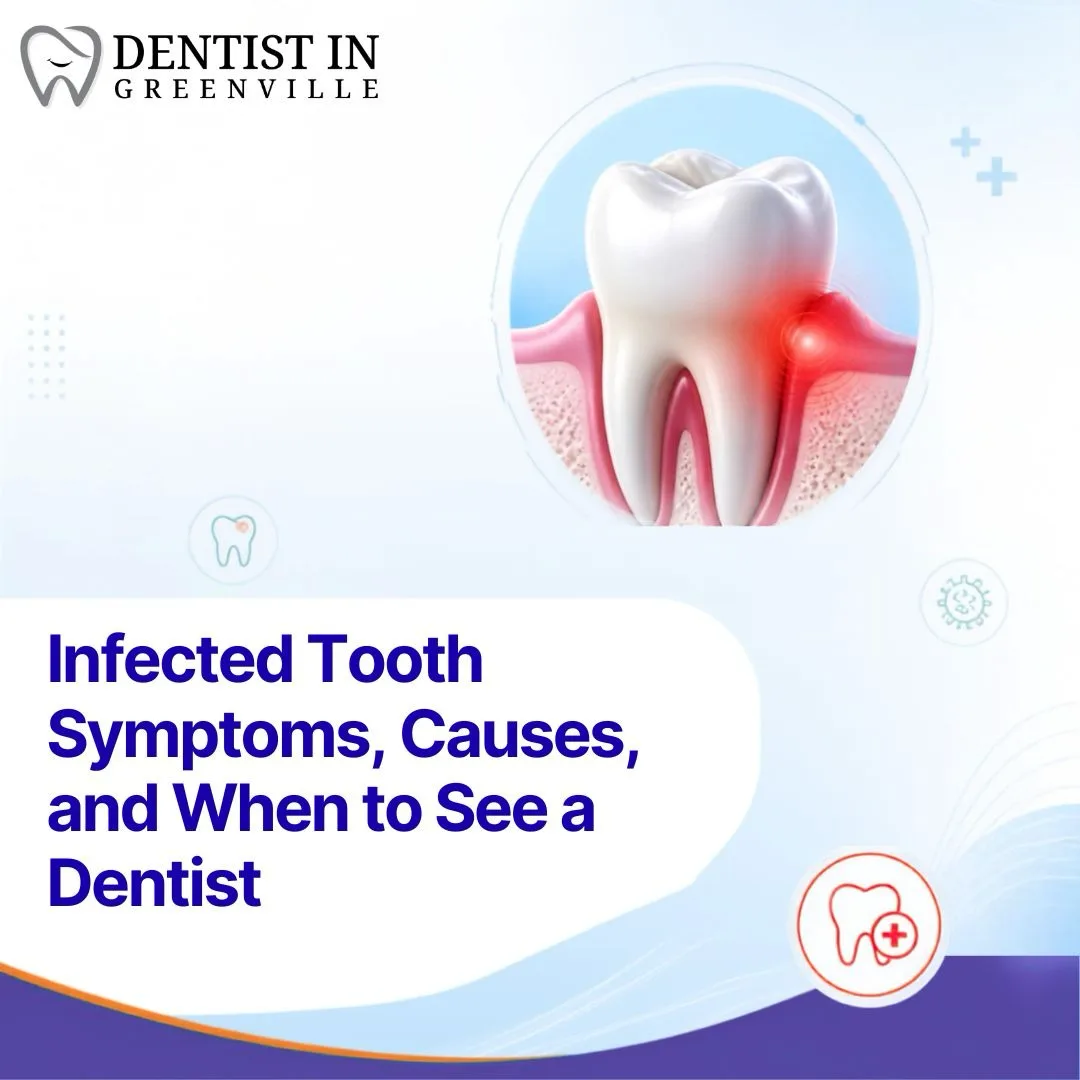
A sudden toothache can stop daily life. You may feel throbbing pain, swelling, or sensitivity to hot and cold. You may see pus or notice a bad taste in your mouth. These are common signs of an infected tooth — and of a dental infection that is already underway.
Bacteria can cause an abscessed tooth or pulpitis, and gum disease raises the risk. An untreated tooth abscess can spread infection into nearby tissue, the jaw, and beyond. Below you'll find the symptoms to watch for, the causes behind them, and when to call for emergency dental care in Greenville, SC.
Already in pain or swelling? Don't wait it out — our tooth infection treatment in Greenville is usually available the same day. Call (864) 284-0066.
An infected tooth rarely stays quiet. Patients most often describe a severe toothache that throbs and radiates into the jaw or ear. Swelling around the affected area is common, and it can make chewing painful. Sensitivity to hot or cold foods is another frequent complaint. Some people see pus draining from the gum, which points to an abscess.
Watch for any of the following:
Get care immediately if swelling spreads toward your eye or neck, if you have trouble swallowing or breathing, or if you have a fever alongside facial swelling. Those are signs the infection is spreading and need urgent attention.
Gum disease often sets these infections up by letting bacteria reach the pulp inside the tooth. Recognizing the signs early matters: delaying care worsens the pain and pushes a simple fix toward a more involved one. Over-the-counter pain relief may quiet symptoms for a few hours, but it does nothing to the infection causing them.
Tooth infections start in a handful of predictable ways. Bacteria usually enter through an untreated cavity, a crack in the tooth, or through the gum line. Poor oral hygiene lets plaque build up, which leads to tooth decay and eventually a toothache. A deep filling, a dental injury, or a tooth that has been traumatized years earlier can also let bacteria reach the pulp.
Certain factors raise your risk:
Pain medication may mask the symptoms, but it won't reach the underlying problem. Pulpitis and an infected tooth both need professional treatment — typically root canal treatment, drainage, or antibiotics — before the tooth can settle.
An infected tooth needs prompt attention. Swelling, a severe toothache, or pus all signal an urgent need for treatment, and a throbbing sensation usually worsens over time. These symptoms mean bacteria are active, and complications follow if the tooth is left alone.
At your visit, expect the following:
If the tooth has already abscessed, our guide to abscessed tooth treatment explains how dentists stop the infection fast.
A tooth infection won't resolve on its own, and it doesn't get less expensive with time. If you have pain, swelling, or pus, call Dentist in Greenville at (864) 284-0066 or book an appointment — we're at 4 Market Point Dr Suite E, Greenville, SC 29607 and we keep same-day slots open for urgent cases.
Common infected tooth symptoms include a toothache that keeps getting worse, with pain that throbs or feels sharp. You may see pus or an abscess on the gum. Swelling and sensitivity to hot or cold also appear. These signs point to a dental infection or pulpitis — inflammation of the tooth pulp.
Bacteria cause most dental infections. They enter through a cavity or a crack in the tooth, and gum disease lets them spread around the tooth as well. Poor oral health raises the risk of pulpitis and related problems.
See a dentist right away for a strong toothache. Go in if you spot pus or swelling, or if you have throbbing pain or long-lasting sensitivity. If you think you have an abscess, seek care fast — and go to an emergency room if swelling affects your breathing or swallowing.
Treatment can include a root canal or a tooth extraction. The dentist may drain an abscess or pocket of pus, and may prescribe antibiotics if the infection has spread. Pain relief and follow-up care are part of the visit.
Brush and floss every day and keep regular dental visits. Treat gum disease and fix cavities early. Good oral health cuts your chance of a dental infection and the toothache that comes with it.
Common infected tooth symptoms include a toothache that keeps getting worse, with pain that throbs or feels sharp. You may see pus or an abscess on the gum. Swelling and sensitivity to hot or cold also appear. These signs point to a dental infection or pulpitis — inflammation of the tooth pulp.
Bacteria cause most dental infections. They enter through a cavity or a crack in the tooth, and gum disease lets them spread around the tooth as well. Poor oral health raises the risk of pulpitis and related problems.
See a dentist right away for a strong toothache. Go in if you spot pus or swelling, or if you have throbbing pain or long-lasting sensitivity. If you think you have an abscess, seek care fast — and go to an emergency room if swelling affects your breathing or swallowing.
Treatment can include a root canal or a tooth extraction. The dentist may drain an abscess or pocket of pus, and may prescribe antibiotics if the infection has spread. Pain relief and follow-up care are part of the visit.
Brush and floss every day and keep regular dental visits. Treat gum disease and fix cavities early. Good oral health cuts your chance of a dental infection and the toothache that comes with it.
Tell us a little about what you need — we'll be in touch shortly.
4 Market Point Dr Suite E, Greenville, SC 29607, United States

Hi! I'm Tooth fairy! Your AI Assistant Ask me anything