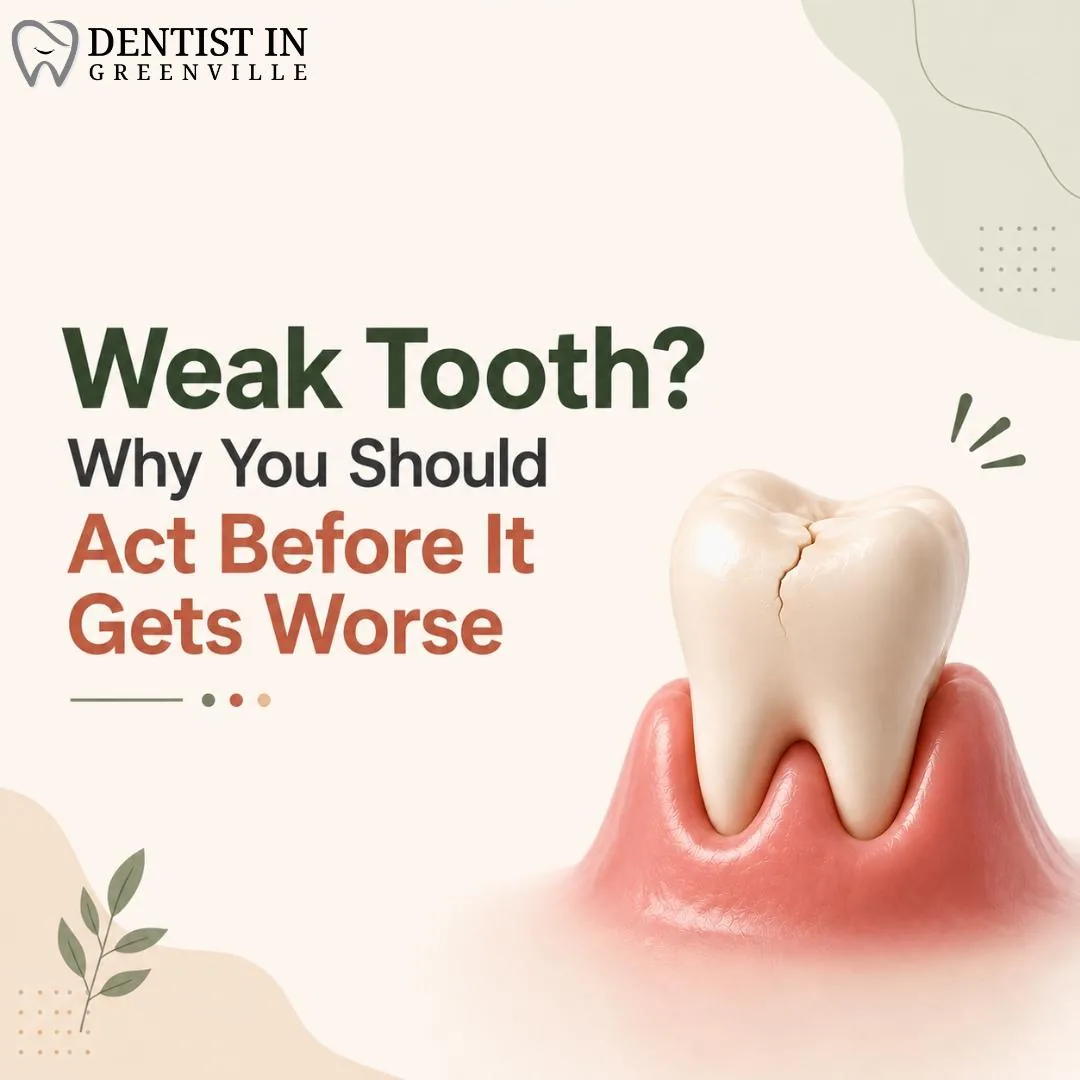
A weak tooth can cause sharp pain, sensitivity, or a small chip. Many people ignore the first signs and wait. This can lead to tooth decay, cavities, and worse oral health. Weak Tooth often starts with thin enamel or a small white spot.
Enamel cannot be regenerated once it has been lost. Here you will know about simple steps for at-home care, better nutrition, and when to seek emergency care or a dentist visit. You will also know about treatments like fillings and restoration, and how preventive care can stop bigger dental treatment.
Ignoring a weak tooth can lead to serious problems. Early intervention protects against pain, breakage, and infection, keeping dental health intact.
Weak teeth often result from thinning enamel. This makes them vulnerable to chipping and cracking. Tooth decay commonly contributes to this issue, leading to further complications like cavities.
White spots on teeth can indicate early tooth decay due to mineral loss. If someone notices these signs, they should act quickly.
Gum disease also plays a significant role in weak tooth problems. It can create an unstable environment that adds stress to neighboring teeth, causing them to weaken as well. Age increases the chances of developing tooth decay and gum disease, making preventive care essential for maintaining dental health. Regular dentist visits help identify these warning signs early and prevent costly treatments down the line.
Ignoring a weak tooth can lead to serious problems. Pain often starts as sensitivity but can escalate into constant discomfort. A weakened tooth is at risk of breaking or chipping, which complicates dental care and may require fillings or other treatments. An untreated cavity can quickly deteriorate the tooth's structure.
Infections pose another significant danger. Bacteria from decay can spread, causing oral health issues like gum disease. This not only affects the weak tooth but also stresses neighboring teeth, possibly leading them to decay or loosen over time.
Failing to act promptly on signs of trouble invites costly and complex dental procedures later on, making preventive care essential for maintaining overall dental health.
To protect weak teeth, people should adopt strong at-home care routines. Regular brushing and flossing can prevent further damage and support overall oral health.
Weak teeth often result from thinning enamel, making them more vulnerable to damage. To strengthen weak teeth, individuals should focus on at-home care and make positive lifestyle changes.
Proper oral hygiene is essential for preventing tooth decay and gum disease. Brushing twice a day with fluoride toothpaste helps protect enamel loss and prevents cavities. Flossing daily removes food particles stuck between teeth, reducing the risk of infection.
Diet plays an important role in dental health as well. Eating crunchy fruits and vegetables can help clean teeth naturally while providing essential nutrients. Limiting sugary snacks reduces the chance of developing cavities.
Drinking plenty of water promotes saliva production, which protects against erosion caused by acidic foods or beverages. Regular dentist visits are crucial for monitoring oral health; prompt action at the first sign of trouble can prevent costly treatments later on.
At-home care is essential, but professional dental treatments are crucial for weak teeth. Dental health specialists can assess the condition of the tooth and recommend appropriate solutions. They may suggest fillings to repair cavities or fluoride treatments to strengthen vulnerable enamel. Early treatment can prevent tooth problems from worsening.
Patients should visit their dentist right away if they notice any signs of weakness or pain. Signs include increased tooth sensitivity or visible white spots on teeth, which indicate mineral loss and early decay.
Ignoring these symptoms often leads to infections, unnecessary breakage, or even emergency dental care needs. Prompt action helps maintain oral health and avoid extensive procedures later on.
A weak tooth shows enamel loss, tooth erosion, or early tooth decay. It can lead to cavities and tooth sensitivity. Act now to protect dental health and oral health.
You feel your teeth sensitivity to hot or cold. You see pits, rough edges, or dark spots. You may notice bleeding gums, which can lead to gum disease.
Decay can reach the tooth center and need more dental treatment. You may need tooth restoration instead of simple fillings. You could face an emergency or tooth loss.
Keep strong oral hygiene. Brush twice and floss once each day. Use fluoride toothpaste and schedule regular dentist visits to cut cavities and stop tooth erosion.
Call your dentist now for severe pain, swelling, or fever. Ask for a dentist visit when sensitivity worsens or a filling falls out. Early care saves dental health and stops tooth decay.
Tell us a little about what you need — we'll be in touch shortly.
4 Market Point Dr Suite E, Greenville, SC 29607, United States

Hi! I'm Tooth fairy! Your AI Assistant Ask me anything