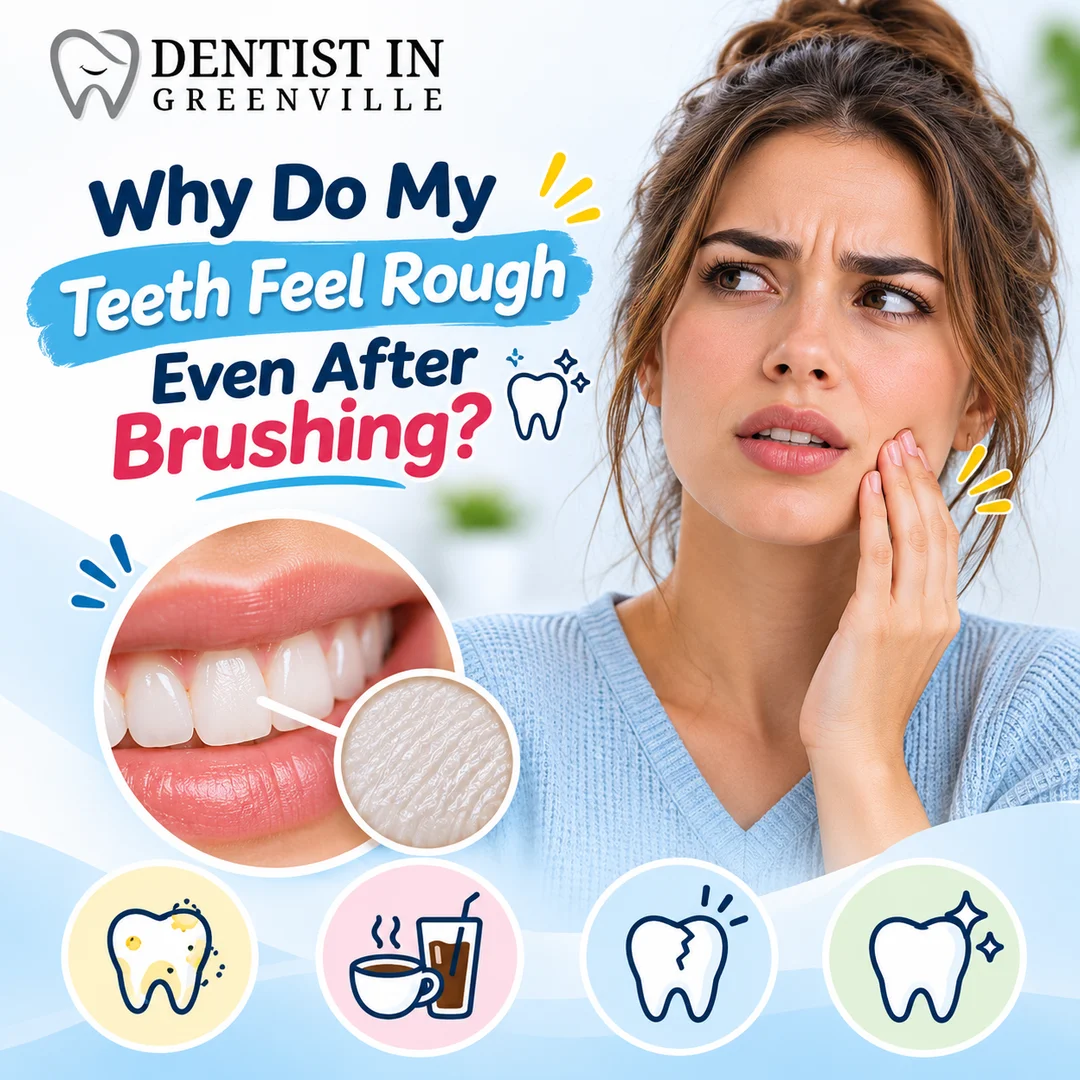
Many people brush and still feel rough teeth. It can feel like sandpaper against the tongue. This common issue makes people worry about plaque, decay, or worn enamel.
Often plaque and enamel erosion cause that rough feeling. Here you will know what makes teeth feel fuzzy and how to fix it with better brushing, flossing, mouth care, and dental visits.
Teeth can feel rough for several reasons after brushing. Bacteria love to cling and form plaque, which leads to a gritty sensation.
A patient reported roughness after brushing. He felt a furry film on his teeth after lunch. Millions of bacteria mix with saliva and food to form a thin biofilm that sticks to enamel and creates a gritty feel.
Plaque, a sticky film of bacteria that forms as people eat throughout the day, stands as the most common reason for rough teeth. Plaque buildup can harden into tartar, and that tartar creates textured surfaces the tongue easily detects.
A woman found a jagged edge on a back tooth that made her tongue wince. Enamel erosion and demineralization can make surfaces grainy and unsmooth even after brushing. A furry feeling on teeth usually signals plaque buildup that attacks enamel and can lead to decay and tooth sensitivity.
A tooth that suddenly feels rough or sharp often means a small chip or a worn filling edge. Professional dental cleanings and better oral hygiene remove plaque and tartar, lower bacteria levels, and help reduce gum irritation and sensitivity.
Acid erosion eats away tooth enamel and makes surfaces feel grainy or unsmooth. Saliva and bacteria mix with food to form a biofilm that produces acid, which speeds demineralization.
Plaque buildup remains the most common reason teeth feel fuzzy after brushing, and tartar hardens into textured deposits that the tongue can sense. Physical trauma or a worn filling can also leave jagged edges that feel rough and can raise tooth sensitivity.
Enamel erosion leads to visible wear and adds risk for decay and sensitivity. Millions of bacteria coat teeth each day, so oral hygiene must fight both plaque and acid. Professional dental care can remove tartar and spot demineralized areas before they worsen. Next, learn how to address rough teeth with proper brushing and flossing techniques.
Dry mouth cuts saliva flow and lets millions of bacteria cling to teeth. That mix of bacteria, saliva, and food forms a thin biofilm, which feels furry and causes plaque buildup. Plaque then hardens into tartar, which makes textured, rough surfaces.
Enamel erosion sits high on the list of causes, leaving grainy, unsmooth enamel even after brushing. Demineralization can add rough patches, and worn or damaged fillings can create jagged edges. A tooth that suddenly feels rough often signals a chip or a worn filling edge.
A dentist can scrape away tartar and polish enamel to smooth teeth. Better oral hygiene and regular cleanings help stop plaque and tartar buildup. Dry mouth, which lowers saliva, also raises the risk of decay and tooth sensitivity.
Patients should talk to their dentist about treatments for reduced saliva and ways to protect enamel.
People can fight rough teeth with the right techniques and tools. Using soft-bristled brushes helps avoid gum irritation, while flossing daily clears out plaque between the teeth.
Proper brushing and flossing techniques play a vital role in maintaining smooth teeth. Effective dental care can prevent rough textures from plaque and tartar buildup.
These effective methods help keep teeth smooth and healthy while reducing any fuzzy feeling that might arise from poor oral hygiene practices.
Professional dental cleanings help keep teeth smooth and healthy. Dental hygienists remove plaque and tartar that brushing can miss. Plaque is a sticky film of bacteria that builds up on teeth throughout the day.
Tartar develops from hardened plaque, creating rough surfaces that feel fuzzy to the tongue. These rough areas can lead to enamel erosion and tooth decay if left unchecked.
Routine visits for professional cleanings can prevent these issues before they start. They also assist in managing gum disease, which affects overall dental health. Maintaining regular appointments allows for better oral hygiene practices at home too.
People who prioritize their dental care often notice smoother teeth after professional cleaning sessions. This makes a big difference in how teeth feel daily, so scheduling those appointments matters greatly!
To keep teeth feeling smooth, people should watch their diets and limit acidic foods. Staying hydrated also helps maintain saliva levels, which protect enamel from decay and erosion.
Acidic foods and drinks can harm teeth. Citrus fruits, soda, and even wine contain acids that erode enamel. This erosion leads to rough surfaces on teeth. Over time, it can make brushing feel pointless; the graininess remains no matter how well one scrubs.
A friend once learned this lesson the hard way after overindulging in lemonade during summer picnics. She felt her teeth were like sandpaper afterward. Reducing these acidic treats can help maintain smoother teeth.
Switching to water or less acidic options gives a break to tooth enamel. Staying hydrated encourages saliva production too, which naturally protects against acidity. Drinking more water helps wash away food particles and bacteria that cause plaque buildup as well. For better dental health, avoiding those sharp-tasting delights is key!
Staying hydrated helps keep saliva levels up. Saliva plays a key role in oral health. It washes away food particles and neutralizes acids from bacteria. A dry mouth can lead to rough teeth, as it allows plaque buildup to thrive. Without enough saliva, tooth surfaces feel grainy or unsmooth even after brushing.
Drinking water regularly combats dryness and promotes healthy saliva production. Good hydration also supports overall dental care by preventing tooth decay and gum disease. People who sip on water throughout the day often find their teeth maintain a smoother texture, enhancing their dental health journey.
Your teeth might feel rough due to plaque buildup. Even a good brushing can leave some behind. If you skip flossing, that could also make your teeth feel gritty.
Absolutely! Some toothpastes contain abrasive ingredients that can wear down enamel over time. If your paste is too harsh, it may contribute to the rough feeling on your teeth.
Yes, indeed! Foods high in sugar or acidity can lead to plaque and tartar buildup. This makes your teeth feel less smooth despite regular brushing.
That’s a smart move! A dentist can help identify any underlying issues like gum disease or cavities. Regular check-ups keep those pearly whites in tip-top shape and feeling smooth again.
Tell us a little about what you need — we'll be in touch shortly.
4 Market Point Dr Suite E, Greenville, SC 29607, United States

Hi! I'm Tooth fairy! Your AI Assistant Ask me anything